
Brightside Health
Brightside Health IncMedical
4.0917.00 Reviews
- Version
- 17.92.0
- Installs
- 50.00K
- Age Rating
- Everyone
Screenshots
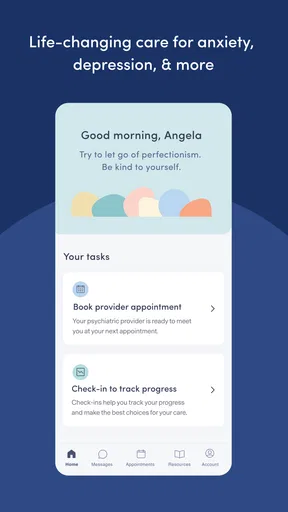
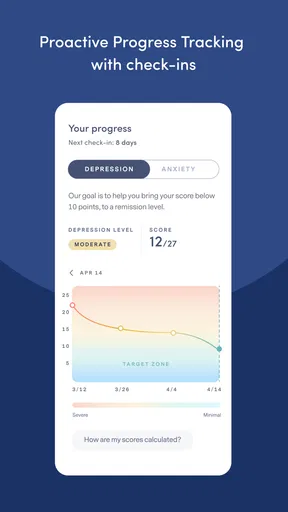

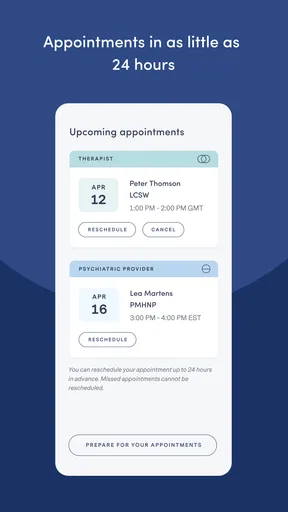
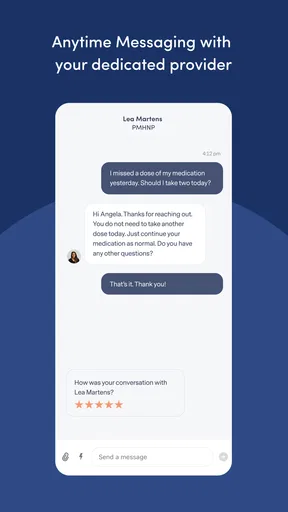

Our Review of Brightside Health
 Analysis by Appyee
Brightside Health is the kind of mental health app I would recommend to someone who wants professional support without making every appointment depend on a trip across town. After spending time with it, my overall impression is positive but measured: its value comes from bringing virtual care into a more manageable routine, not from replacing every form of therapy or urgent help. It is a free medical app from Brightside Health Inc, aimed at everyday access to mental health care through a phone.
That distinction matters. Many wellness apps focus on breathing exercises, mood notes, motivational reminders, or general self-care. Brightside Health sits closer to a remote-care service than a simple collection of calming tools. If you are looking for a structured way to connect with mental health support from home, it makes more sense than a meditation-only app. If you want a completely self-guided experience with no clinical element, it may feel more involved than necessary.
How Brightside Health fits into real life
The first thing I noticed is how naturally a virtual mental health service can fit around an ordinary week. Imagine finishing work late, feeling mentally drained, and realizing that arranging an in-person appointment would mean another commute, more planning, and possibly taking time away from other responsibilities. An app-based route can lower that initial barrier. I can open the service from a familiar place, review what I need to do, and keep the process connected to the device I already use every day.
That convenience is especially meaningful for people who live far from suitable providers, have unpredictable schedules, or feel uncomfortable entering a clinic for the first time. It can also help someone take the first step before their concerns become impossible to ignore. In my view, reducing logistical friction is one of the strongest reasons to consider this particular app.
At the same time, I would not confuse convenience with instant care. A virtual service still requires attention, follow-through, and honest communication. Opening an app is easy; describing how you have been feeling, keeping track of the next step, and making time for care require more commitment. Brightside Health works best when I treat it as part of a care routine rather than as a quick fix I can check once and forget.
The app is listed for Everyone, which makes its presentation approachable rather than intimidating. That does not mean every person or every situation is a match. Mental health needs vary widely, and age suitability in an app store should not be read as a clinical recommendation for every user. A parent, guardian, or healthcare professional may still need to help decide whether this kind of service is appropriate.
A more practical alternative to searching alone
Compared with searching through local directories, calling offices, and waiting for replies, an app such as this can make the starting point feel more organized. That is a real advantage for anyone who tends to postpone care because the process feels confusing. Instead of treating the phone as merely a place to read health articles, Brightside Health gives it a more direct role in the care journey.
Compared with a traditional in-person provider, the trade-off is clear. Virtual access can save time and make regular contact easier, but it cannot reproduce every part of sitting in the same room with a clinician. Some people communicate more comfortably face to face, while others find a screen less stressful. I would choose based on which format makes it more likely that I will speak openly and continue attending.
It also differs from general therapy marketplaces. A broad marketplace may offer a large range of professionals and styles, while Brightside Health presents a more focused route into its own virtual care experience. That can reduce decision fatigue, but it may also feel less flexible to someone who wants to compare many independent providers before choosing.
What the app does well for someone starting care
Its strongest quality is the way it frames mental health support as something that can be approached from an everyday device. I do not have to wait until I feel perfectly organized before beginning. That is important because low mood, anxiety, stress, and exhaustion often make administrative tasks feel unusually difficult. A simpler starting point can be the difference between taking action and putting it off for another month.
Another useful insight is that virtual care can help separate the decision to seek help from the question of whether I can physically reach a provider. Those are different problems, and solving the travel problem does not solve everything, but it removes one common excuse and one genuine obstacle. For people with mobility limitations, demanding family schedules, or limited local options, that is more than a minor convenience.
I also see value in using the app during a stable period, not only during a crisis. Beginning when I can still think clearly may make it easier to understand the service, prepare questions, and build a consistent habit. Waiting until distress is overwhelming can make any new system feel harder to navigate. My practical tip is to explore the app when you have enough energy to make decisions, then keep any follow-up tasks visible in your normal calendar or notes system.
That workflow is not glamorous, but it is realistic. A mental health app becomes more useful when it is attached to an existing routine, such as checking it after breakfast or setting aside a quiet period after work. I would avoid opening it only in moments of panic and expecting the entire problem to be solved immediately. The better approach is to use it as one dependable doorway into care.
The main limitation: virtual care is not universal care
The biggest weakness is not necessarily a missing button or an awkward screen. It is the boundary of the format itself. A phone-based service cannot provide emergency intervention, physical assessment, or the full range of support that may be needed for severe or rapidly changing symptoms. If someone is in immediate danger, thinking about self-harm, or unable to stay safe, an app should not be the only plan. Contacting local emergency services or an appropriate crisis resource is the responsible next step.
Even outside emergencies, some people will need care that is more intensive, more specialized, or more personal than a virtual app can offer. Someone who wants a long-term relationship with a local therapist, coordinated in-person treatment, or support involving several healthcare professionals may prefer a conventional clinic. I would also be cautious if privacy at home is difficult. A virtual appointment is only comfortable when I can speak without family members, roommates, or coworkers overhearing.
There is a second kind of friction: digital convenience can create the illusion that care should be effortless. Notifications, forms, messages, and appointments still need responses. If I am already overwhelmed, even a well-designed service can become another item on the list. My workaround would be to prepare a short summary before using the app: what has changed, how long it has been happening, what makes it better or worse, and what kind of support I hope to receive. A few clear notes can make a virtual conversation more productive.
I would not recommend choosing it solely because it is free to install. The download price removes an initial cost barrier, but healthcare decisions should also consider whether the service fits the kind of support you need and whether any later care arrangements are suitable for your circumstances. The app should be viewed as an entry point to a medical service, not as a promise that every part of treatment is cost-free or appropriate for everyone.
Who is most likely to benefit
Brightside Health is a strong candidate for adults who want to investigate virtual mental health care, prefer handling early steps from a phone, and can participate in appointments or care tasks with reasonable privacy. It may be particularly useful for someone who has delayed seeking help because local appointments are inconvenient or because the first phone call feels like too much effort.
It can also suit people who already know that remote communication works for them. If you are comfortable explaining symptoms through a screen, keeping track of digital tasks, and asking direct questions, the format may feel efficient rather than impersonal. I would suggest approaching the first interaction with a small list of goals instead of trying to describe your entire life at once. For example, identify the problem affecting daily life most strongly and explain what improvement would look like.
People who should look elsewhere include those seeking only relaxation content, those who need immediate crisis assistance, and those who strongly prefer face-to-face treatment. It may also be a poor fit for anyone who cannot reliably find a private place for virtual care or who wants to browse a very broad selection of unrelated providers. In those cases, a local medical practice, an established therapist, or a specialized service may be more suitable.
My advice for a first-time user is to judge the app by the quality of the care pathway, not by how polished the opening screen feels. Ask yourself whether you understand what the next step is, whether you can communicate comfortably, and whether the format encourages you to keep going. Those questions are more useful than simply deciding whether the app looks modern.
What the public response suggests
The app currently holds a 4.0 average from around 2.6 thousand ratings, with roughly 917 written reviews and over 50 thousand installs. I read those figures as evidence of meaningful interest and a generally favorable reception, but not as proof that every user will have the same experience. Medical apps are especially personal: the right fit depends on symptoms, expectations, communication style, and the type of support being sought.
The current release is version 17.92.0, and the app supports Android 7.0 and later. That makes it accessible to people who are not using the newest phone, which is helpful for anyone relying on an older but still functional device. I would still keep the operating system updated when possible, particularly for a medical service, and make sure the phone is dependable enough for the communication involved.
Brightside Health was released on May 25, 2023, so it is not an unfamiliar idea presented as a brand-new experiment. More importantly, I would focus less on its age and more on whether the service matches my needs today. A mental health app can change over time, and a good experience depends on current usability as well as the underlying care model.
My final recommendation
After weighing the convenience against the boundaries, I see Brightside Health as a sensible option for people who want a practical doorway into virtual mental health care. Its best argument is not that it makes difficult feelings disappear. Its best argument is that it can make professional support easier to approach when distance, scheduling, or hesitation stands in the way.
I would recommend trying it if you are looking for a medically oriented remote-care experience and you are ready to participate actively. Before beginning, choose a private setting, write down the concerns you want to discuss, and decide how you will remember follow-up tasks. Those small preparations can make the digital format feel much less scattered.
I would skip it as a primary solution for an emergency, for care that clearly requires in-person assessment, or for anyone who knows that screens make honest communication harder. In those situations, a local clinician or urgent support service is the better choice. For everyone else, the free download and approachable virtual format make it worth considering, provided expectations remain realistic.
In short, Brightside Health is useful because it lowers the practical barrier to seeking help, while its limitation is that convenience cannot replace the depth and immediacy of every other form of care. I would recommend it to a friend who wants to start exploring professional mental health support from home, but I would also remind them that the right care is the care they can access, trust, and continue using safely.
Verdict
Strengths of Brightside Health
- Licensed therapists and psychiatrists are available through one platform.
- Treatment plans can combine therapy and medication management.
- Virtual appointments make care accessible from home.
- The service supports several common mental health conditions.
- Follow-up care helps maintain progress between appointments.
Limitations of Brightside Health
- Availability may vary depending on your state and insurance plan.
- Not suitable for urgent crises or emergency mental health needs.
- Some services may require insurance or involve out-of-pocket costs.
- Video appointments require a stable internet connection and private space.
- Medication options may be limited by clinical and legal restrictions.
Similar Picks in This Category
View All
WebMD: Symptom Checker
WebMD, LLC4.1

Microphone Amplifier
DOSA Apps4.2

Anatomy Learning - 3D Anatomy
3D Medical OU4.5

Period Tracker and Calendar
SimpleInnovation4.9

GoodRx: Prescription Coupons
GoodRx4.8

CVS Health
CVS Pharmacy4.5
Frequently Asked Questions
What is Brightside Health, and what services does it provide?
Brightside Health is a digital mental health platform that connects users with licensed providers through online care. Depending on your location and selected plan, it may offer therapy, psychiatric evaluation, medication management, or combined treatment for conditions such as anxiety and depression. The service is designed for remote appointments and ongoing support, but available providers, treatments, pricing, and eligibility can vary by state and insurance coverage.
How does the Brightside Health treatment process work?
After creating an account, you typically complete an assessment describing your symptoms, medical background, goals, and preferences. Brightside then uses this information to help match you with an appropriate licensed clinician. Therapy sessions and psychiatric appointments are conducted online, while follow-up care may include messaging, treatment recommendations, and progress monitoring. The exact process depends on whether you choose therapy, medication, or a combined care plan.
Does Brightside Health prescribe medication, and how is it delivered?
Brightside Health may provide psychiatric evaluation and medication management when clinically appropriate and legally available in your area. A licensed medical provider reviews your information before making any recommendation, so medication is not guaranteed. If prescribed, medication may be sent through a partner pharmacy or another delivery option, depending on the treatment plan, location, insurance, and applicable regulations. You should discuss side effects and concerns directly with your provider.
How much does Brightside Health cost, and does insurance cover it?
The cost of Brightside Health depends on the service you choose, your location, treatment frequency, medication needs, and whether you use insurance. Therapy, psychiatry, and combined plans can have different prices, and medication costs may be separate. Some insurance plans may cover part of the care, while others may not. Before subscribing, review the current plan details, billing terms, cancellation policy, and any deductible or copayment responsibilities.
Is Brightside Health suitable for mental health emergencies?
Brightside Health is intended for scheduled, non-emergency mental health care and should not replace immediate crisis support. If you or someone else is in immediate danger, experiencing a medical emergency, or having thoughts of suicide, contact local emergency services or go to the nearest emergency department. In the United States, you can call or text 988 for the Suicide and Crisis Lifeline. Brightside providers can explain appropriate next steps during regular care.
